
I’ve viewed Anthropic as the most structurally serious of the leading AI companies when it comes to safety. Their original Responsible Scaling Policy created hard, conditional commitments – if capabilities crossed certain thresholds, safeguards had to escalate. That was not branding. It was governance embedded into deployment decisions.
The new version – https://www.anthropic.com/news/responsible-scaling-policy-v3 – reflects a more pragmatic posture. Capability thresholds are ambiguous; government action is slow; some higher-level safeguards may be impossible to implement unilaterally. So Anthropic is shifting toward transparency, risk reports, and publicly declared safety roadmaps rather than predefined hard triggers.
I understand the reasoning, but I’m concerned about the signal.
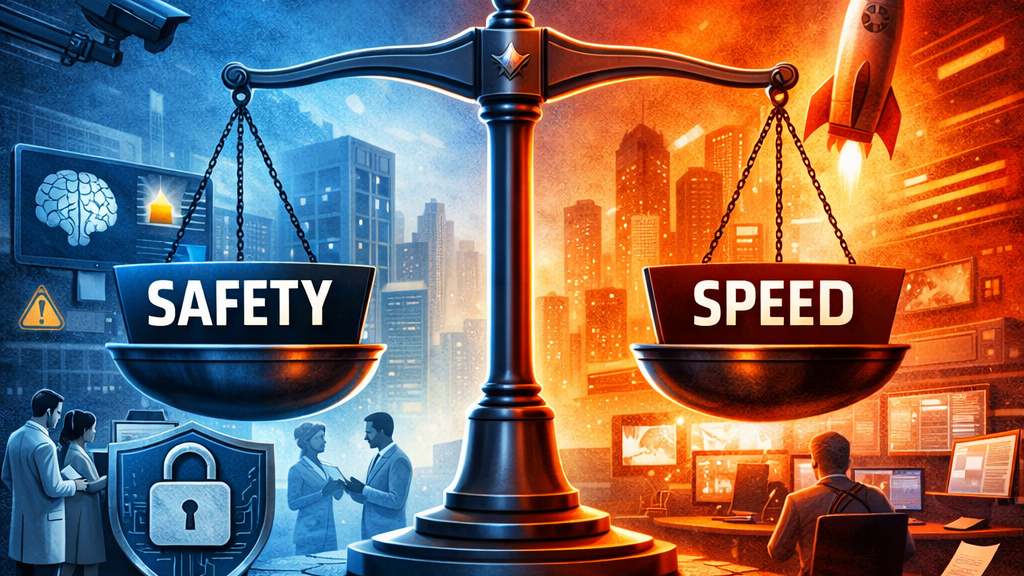
When the most safety-forward company softens its enforceable thresholds in favor of “ambitious but achievable” goals, the message to the broader ecosystem is subtle but powerful: speed and competitiveness may ultimately shape guardrails more than predefined safety commitments, even if that is not the intent.
Large-scale AI development doesn’tt exist in a vacuum. Enterprise AI teams, startups, and mid-market organizations look to the leaders for cues. If the signal becomes “adapt safeguards to competitive reality,” the downstream effect may be accelerated deployment with rationalized oversight.
Governance cannot be a reactive layer applied after capability emerges. It must remain architecture-aware and deployment-gating. Risk reporting, external review, and transparency is valuable, but transparency without firm escalation triggers risks becoming descriptive rather than preventative.
We are entering a phase where AI capabilities will compound faster than regulatory coordination. That makes voluntary discipline even more important, not less. The real competitive advantage in AI will not be raw model sophistication, it will be the ability to deploy advanced systems safely, defensibly, and sustainably at scale.
If the leading AI labs recalibrate safety commitments for speed, the rest of the ecosystem will follow, and that would be a mistake.